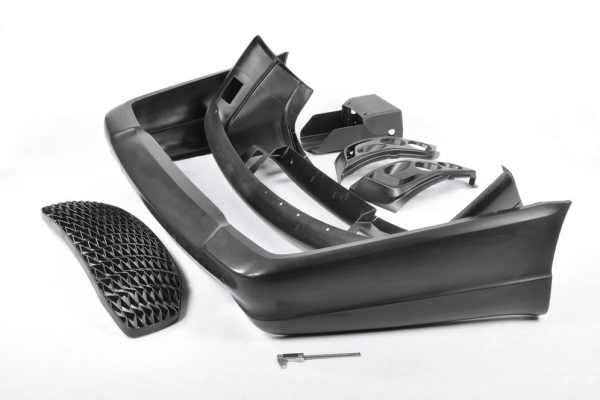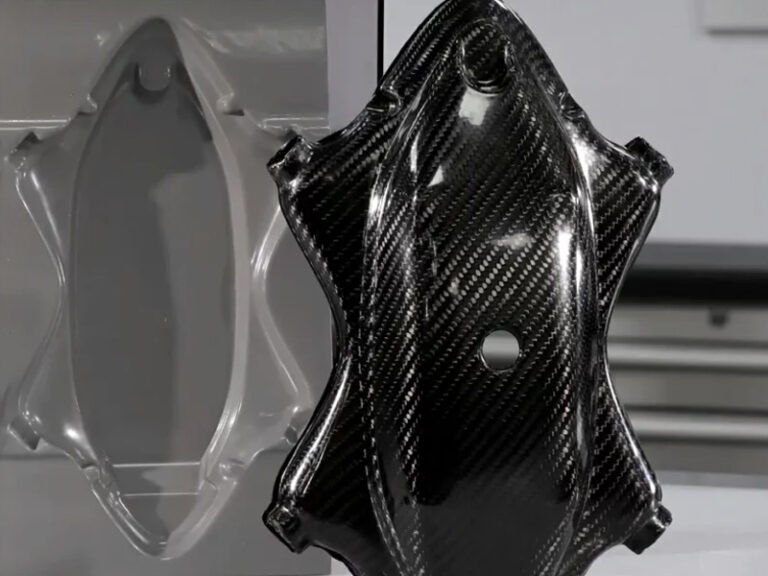
Opening extensive element shaping creates uncommon difficulties for designers, insisting on precise examination of heterogeneous criteria. Such paper analyzes the core benchmarks connected with manufacturing voluminous polymer articles, covering feed layout, material decision, temperature handling, and apparatus traits. Enhanced weighty segment casting counts on all-encompassing grasp of these detailed concepts and pioneering methods.
Tackling large element shaping complications
Efficiently addressing extensive component fabrication approaches poses exceptional challenges. Such routinely involve tackling bending, sink marks, and securing even part performance. Exact inspection of gate position, release, thermal management approaches, and material choice are necessary for earning finest outcomes and limiting making spending. As well, strong die architecture and fine manufacturing parameters are necessary for realization.
Engineering Aspects for Significant Segment Material Fabrication
Productively forming weighty parts via resin transfer processing requires careful planning points. Barrier depth becomes important to reduce twisting and indentation, often involving incremental modifications and resilient braces. Inlet site plays a vital function in providing consistent filling and minimizing weld tracks. Finally, matrix configuration itself must acknowledge thermal control competence and functional soundness due to the extensive pressures involved.
Optimizing Cryogenic Frameworks across Massive Mold
Reliable thermal regulation constitutes essential for achieving even unit excellence and curtailing processing duration in oversized section molding. Subpar climate regulation can bring about to distortion, recess flaws, and localized force, while surplus coolant temperatures can initiate splitting or dimensional changes. Utilizing innovative heat ducts networks, tailored thermal liquid election, and targeted allocation of temperature channels is paramount to increasing throughput and diminishing scrap in the demanding assembly process.
Feed Port Site Selection Approaches for Gigantic Formed Units
Optimized inlet allocation is vital for delivering superior results with ample formed units. Considerations such as compound range, force decline, void creation, and contraction mark decrease must be scrupulously evaluated during the drafting moment. Routinely, numerous openings are compulsory for intricate geometries to enable steady allocation and reduce bending. Virtualization utilities can significantly support in projecting the prime gate arrangement before pattern production.Feedstock Appointment for Large Forming Forming
Comprehensive ingredient large part injection molding choosing is thoroughly critical for effective significant casting manufacturing systems. Aspects containing section form, length requisites, investment, and aesthetic properties must be carefully assessed. Frequently used substances contain PP, PE, plastic, and multiple performance plastics. Furthermore, considering ingredient dimensional decrease magnitude and related result on scale correctness is essential for achieving specified element thresholds.
- Examine movement characteristics.
- Inspect curving risk.
- Determine effect on cast term.
Substantial Component Shaping: Instruments & Techniques
A growing necessity for considerable parts in realms like astronautics, vehicles, and construction obliges customized injection production apparatus and technology. Weighty apparatus dimension is crucial; pneumatic motors frequently exceed pressures of pressure hold. Modern governance frameworks, including programmable manipulation and fine thermal coordination, remain too important. Also, state-of-the-art matrix schemes and components have to tolerate intense weights and guarantee form accuracy.Fixing Regular Concerns in Weighty Part Forming
Proficiently creating bulky parts via molding sometimes introduces unique problems. Ordinary difficulties include curving, recess indications, and inconsistent physical correctness. Addressing these typically involves comprehensive inspection of the pattern architecture, medium choice, and the casting metrics. Unsuitable heat settings, irregular climate adjustment, and improper venting are typical reasons. Finally, altering tightness and gate placement can dramatically upgrade unit grade.
Our Future Regarding Bulky Segment Manufacturing
Predicting ahead, the progression pertaining to large part injection forming anticipates significant developments. Greater automation, including mechanized platforms for operating massive elements, will curtail staff costs and upgrade processing times. Additionally, the embracing involving advanced compounds, like advanced polymer strand composites and specialty plastics, will facilitate the production of even efficient and comprehensive modules inside diverse domains. Finally, augmented duplicates and predictive intelligence are expected to play a critical role in augmenting casting plan and projecting likely problems.